

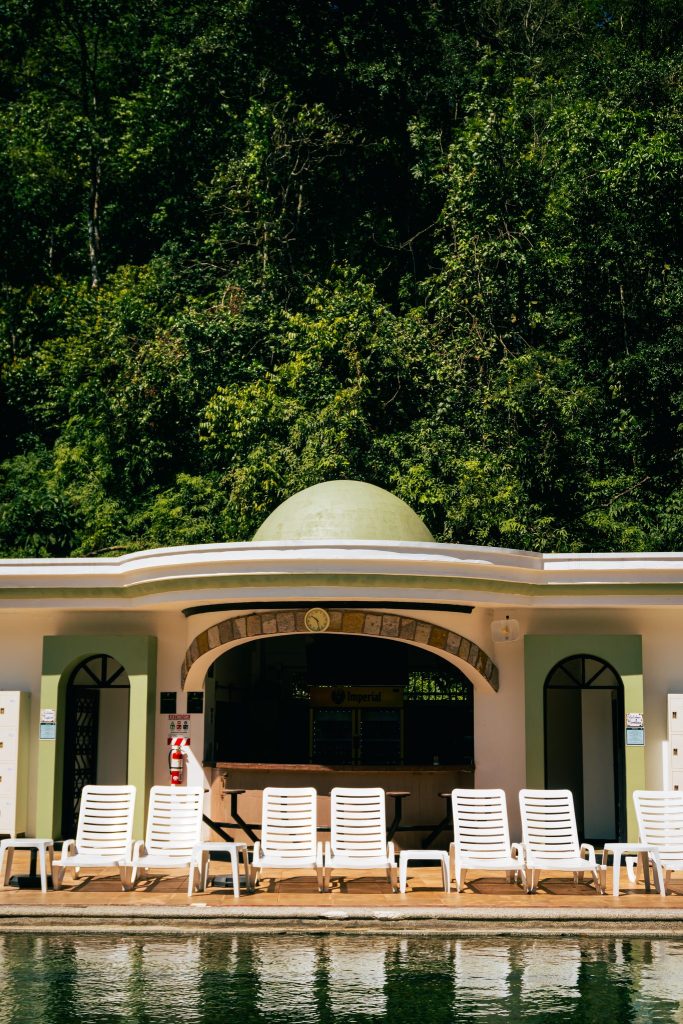
Not every hot spring in Costa Rica is actually a hot spring. Some are swimming pools with a boiler room humming behind a wall. The thermal pools Costa Rica travelers picture — steaming, mineral-rich, tucked into the jungle — are a rarer thing, and one of the best places to find the real version is in San Carlos, in the Aguas Zarcas area near Ciudad Quesada, where a natural thermo-mineral river runs straight through 24 acres of primary rainforest at El Tucano Resort & Thermal Spa.
What makes a pool “thermal,” really
The word gets used loosely, so it’s worth being precise. A true thermal pool is filled by water that comes out of the ground already hot, heated deep underground by volcanic activity, then channeled into pools with no boiler, no heater, and no added chemistry to warm it. An artificially heated pool, by contrast, starts as ordinary tap or well water and gets its temperature from mechanical equipment. Both can be pleasant to swim in, but only one carries the natural minerals, the geothermal heat, and the sense of place that draws people to Costa Rica’s volcanic corridor in the first place.
At El Tucano, the source is a natural thermo-mineral river that crosses the property and feeds the open-air pools directly. There’s no boiler room to hide, because there’s nothing to hide — the heat comes from the ground, the same way it has since the resort opened in 1993.
Natural thermal pools vs. artificially heated pools
- Source: Natural pools are fed by a thermo-mineral river or spring; artificial pools are filled with regular water and heated by machinery.
- Setting: Natural thermal pools tend to sit within the landscape that created them — rainforest, riverbank, volcanic terrain — rather than a poolside deck built around equipment.
- Water character: River-fed thermal water carries dissolved minerals from its underground journey; heated tap water does not.
- Consistency: A natural source runs continuously, day and night, independent of a mechanical system.
If you’re planning a trip specifically to soak in the real thing, it’s worth asking any property directly whether their pools are spring-fed or heated — the difference isn’t always obvious from a brochure.
A rainforest setting, not a resort deck
Part of what separates natural hot spring pools in Costa Rica from a hotel pool with heated water is the setting they occupy. At El Tucano, the thermo-mineral river runs through 24 acres of primary rainforest — mature, uncleared forest rather than landscaped grounds — so the pools sit among trees, birdsong, and running water instead of a paved deck. It’s a quieter, more grounded kind of soak, closer to what visitors imagine when they hear “hot springs in Costa Rica” than a chlorinated pool with a volcano view on a postcard.
Guests staying at the resort get included access to the thermo-mineral pools and river throughout their stay, so there’s no separate ticket or scheduling to manage — it’s simply part of being on the property. The rooms at El Tucano put you a short walk from the river itself.
Where these thermal pools actually are
A common mix-up: assuming San Carlos hot springs are the same thing as La Fortuna hot springs. They’re not. El Tucano sits in the canton of San Carlos, in the Aguas Zarcas area a few minutes from Ciudad Quesada — its own thermal-water zone, distinct from the springs around La Fortuna and Arenal Volcano, which are roughly a 40–45 minute drive away and make for a good day trip rather than the place you’re staying. If you’re deciding between bases, our comparison of San Carlos vs. La Fortuna: where to stay lays out the practical trade-offs. For the fuller picture of the region’s geothermal sites, see our page on hot springs in San Carlos.
Beyond the soak: spa, food, and rest
Thermal water is the draw, but it’s rarely the whole trip. At El Tucano, the same forest that feeds the river also houses Selva Spa, recognized at the World Luxury Spa Awards 2013 for its massages, rituals, and hydrotherapy treatments — a natural pairing with a morning or evening soak. When it’s time to eat, La Foresta restaurant serves Costa Rican and international dishes in the same forest setting. And if you want to understand what the minerals in that river actually do for the body, our article on thermal mineral water benefits covers it in more depth.
Frequently asked questions
Are El Tucano’s thermal pools open-air?
Yes — the pools are open-air, fed directly by the thermo-mineral river as it moves through the rainforest.
Do I need a separate pass to use the thermal pools?
Hotel guests get included access to the pools and river during their stay. For questions about rates, day passes, or hours, call +506 2460-6000.
Are these the same hot springs as La Fortuna?
No. El Tucano’s pools are in San Carlos, near Aguas Zarcas and Ciudad Quesada. La Fortuna and Arenal Volcano are a separate area, about a 40–45 minute drive away.
If a natural, river-fed thermal soak in the middle of the rainforest is what you came to Costa Rica for, San Carlos delivers it without the detour to La Fortuna. Book your stay directly with El Tucano Resort & Thermal Spa and soak in water that’s been hot since long before there was a resort here — or call +506 2460-6000 to talk through dates and rooms.
Frequently asked questions about Thermal Pools Costa Rica
What does El Tucano offer for thermal pools costa rica?
El Tucano Resort & Thermal Spa is one of the best options for thermal pools costa rica in San Carlos, Costa Rica: natural hot springs, spa, restaurant and forest, with the best rate guaranteed when you book direct.
Is thermal pools costa rica at El Tucano worth it?
Yes. thermal pools costa rica at El Tucano combines nature, wellness and comfort in one place, minutes from Ciudad Quesada and Arenal Volcano.
Related guides
- hot springs in San Carlos
- All Inclusive Costa Rica Hot Springs: What San Carlos Really Offers
- Hot Springs Hotel in San Carlos, Costa Rica: Where to Stay for Included Thermal Access
Thermal pools costa rica at El Tucano Resort & Thermal Spa
Book your stay direct at El Tucano Resort & Thermal Spa in San Carlos, Costa Rica, and plan your trip with the official Costa Rica travel guide.